Powered By Blogger

Wednesday, May 25, 2016

Motivation Use: 'I Have No Time' Means You Are Lying

(YouTube candidate!)

Fight for motivation! Actively search for motivation! We coaches and professionals do not utter those words just for nothing. They mean something that makes insurmountable changes.

You are lying to yourself if you say that you do not have time to exercise or commit to an exercise regimen. Straight lying. You are not the only receiver of this lie: your supporters, be they visible to you or watching your good deeds from afar, are also being lied to. That news might be hard to swallow. But, the best have overcome this phrase: your favorite or most respected celebrity, professional athlete, musician, pastor, etc has overcome this phrase and does not let 'I have no time' get in the way of success or deeds.

You do have time to exercise.

Busy schedules are certainly understood. The term 'busy' gets in the way of progress at times when it is overused.

I would say that I get this rejection often: when I ask folks if they want to partake in a free session or try to motivate individuals in to being fit, 'I don't have time' or 'I am too busy' sneaks out. Not everyone says it. The higher motivated individuals that I have trained do not say it. Individuals who I have seen train with trainers in the gym do not say it. So, why do people say it as if it supposedly solves their 'I need to exercise' issue?

First, it is important to identify who might utter this phrase of 'not having time':
1. Individuals who never workout because they:
          - Do not want to.
          - Do not know how to.
          - Are not encouraged to or do not have any or enough positive fitness accountability partners.
          - Are unfortunately and unfairly bullied/body-shamed - keep a positive image about yourself!
          - Have low self-esteem and self-efficacy.


2. Those who DO workout but do not want to take their body past its comfort zone or do their own thing in getting results (sometimes, fitness fads can help): No time to deviate from a normal routine even though there is a result-rut.

Preferred Statements
  • "I don't like to exercise."
  • "I'm not interested."
  • "I had a bad experience and need help getting over it."
  • "Can you or do you work with injuries?" - it basically asks if the coach/trainer is qualified.
  • "I don't know how to exercise."
  • "I don't want to train with you."

What is Needed?
To individuals who say that they do not have time, it is imperative to entrust knowledge and sequencing or time constraint controls to their busy lifestyles. Yes, it is good to have a busy lifestyle. However, the busiest people make room. If you truly want something, you will work to get it.

I) Knowledge: Saying 'I do not have time' portrays one meaning of: I can't do what I want to do in 60 minutes. OK. Fair enough. How about we try to complete it in 30 minutes? Or, 15 minutes. Sometimes, all a person needs is 15 to 30 minutes of exercise. That time period is effective and to the point. As a trainer/coach, I have given individuals 20 to 30 minute workouts; and that's all they needed once they experienced it. Their previous notion was: I need to spend more than 60 minutes working out. Not true. So, knowing what to do is vital in these 15 to 30 minutes. As an example using no equipment or machines (favors the in-home or outdoor exerciser:

General Warm-up (5 minutes) = jumping jacks, run-in-place (switching hand and arm position), and/or brisk walk.

Dynamic Warm-Up (5 minutes, 1 set, 10 reps) = arm circles (forward and backwards), arm hugs, arm swings, neck ear-to-shoulder, neck just-say-no, butt-kicks, high knee, torso rotation, leg swings (linear and lateral), shoe-sole taps opposite hand, heel-toe raises, and greatest stretch (3x per side).

Exercises (10 to 15 minutes) = Sit-to-stand (great for seniors) or rapid body weight squats (30 seconds) >>> Wall push-ups or regular push-ups (30 seconds) >>> Mountain Climbers (15 seconds hand-width, 15 seconds outside hands, a.k.a, frog climbers) >>> Front Plank Hold (30 seconds).

Stretch/Cool Down (5 minutes, 20 second holds for 2 to 3 sets) = specifically tight muscles or muscles that just received the brunt of the workout: quads, chest, shoulders, hip adductors, lower back.

This routine is only an example. Since many people are not used to these exercises, then they are enough. Advanced exercisers can take it up a notch by adding exercises with no rest between exercises and 60-second rest periods between sets. The exercises can be done one after the other without rest periods, with rests between exercises (favors lower level exercisers and works very well with senior citizens as seen through experience), or with break-ups (split the four exercises in to two groups of two). The general warm-up and dynamic warm-up can be shortened, if needed. There is always a way to modify an exercise. If you do not know, then ask!

As an example using equipment and machines, keeping the similar format as the above fitness design (a fresh favor for the gym-goer):

General Warm-up (5 minutes) = elliptical

Dynamic Warm-up (5 minutes) = you can copy the same one from above.

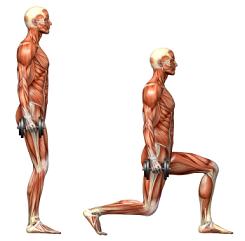
Exercises (10 to 15 minutes) = Dumbbell Lunges (30 seconds) >>> BOSU Push-ups (30 seconds) or Standing Cable Chest Press (30 seconds) >>> TRX Rows, standing pulldown, or dumbbell overhead press (30 seconds) >>> Medicine Ball Jacknife (30 seconds).

Similar explanation as the no equipment one: Exercises can be added; rest periods can be shortened or lengthened; warm-ups can be shortened or lengthened; ask about new exercises, how to work around injuries, or training for something on short time...I am a professional.
 
II) Control: It does not hurt to look over your important schedule and determine where you have priority adjustments. What's a priority adjustment? Say, you want to watch your favorite TV show, which starts at 8pm. You get home after a long day at work at 7:30pm: All you want to do is unwind. Totally understood and have experienced a long day at work! You make your priority adjustment when you either get in a quick workout before your show starts or when you skip the show for that evening. The last resort is to get in an exercise session after the show ends at 9pm. But, chances are that you just ate dinner.

Regarding control, if you have children, it is even more difficult to exercise. Two-parent homes, you have the advantage of having one parent entertain the children for 15 to 30 minutes. Not so bad. Single-parent homes, you have an advantage. Yes, you do: If your children need help with homework, then do a repetition while they figure out a problem. If your children are younger, then exercise while they play with them in plain view - your child might join in - completing the 'pay-it-forward' skill.

Some Mindful and Helpful Guidelines
1. Stop saying that you do not have time: It's an excuse. You're lying.
2. Be careful of the words that come of your mouth.
3. Want what you need: Avoid what hinders you. Go after what makes you live better.
4.  Exercise: It is not a punishment. It is a privilege.
5. Stop complaining!
6. Believe that you have 10 minutes to exercise and grow closer to being fit!
7. Really...Just do it!

OK, is that it on this topic? No, there are many ways to attack it as previously mentioned:

With heart,
Derek

Derek Arledge, MS, CSCS, LTP         www.teempt.com       TEEM Performance Training, LLC

Wednesday, May 11, 2016

Body Image: Slaying Them


Ashley Graham, Beyonce, Iskra Lawrence, Meghan Trainor, Serena Williams, and the elegant First Lady of the United States (FLOTUS)...Michelle Obama!

They are all slay'em out there!

All of them have been unfair targets of negative body image portrayals at some point. All of them of done something to combat the labels. They are fierce!

Body image should not be a constant, but society positions it that way. To put math on your mind, if body image (BI) equals x and x equals "2" in the equation ax=b, where "a" is nutrition and "b" is exercise, then as you decline in "a" or nutritional health you also decline in "b" or fitness level and vice versa.

What?

Simply to put it in plain words: if individuals body-shame others less or at a slower rate, then may be two other important aspects like nutritional health and fitness level will improve. Be careful of the words and standards you set or fall victim to. Michelle Obama has really helped the nation out with her Let's Move initiative in this aspect! Continue to like yourself. Respect yourself internally and externally. You do not need others to put you in an unlikeable situation.

Getting back to math: when body image is appreciated more widely, its number increases. Plug in an increasing sequence of numbers in to the above equation and watch "a" and "b" increase as well.

A positive sense of body image gets warped in negativity because of standards and words set by an individuals or group of individuals who could be insecure about a profession - why does a runway model have to be very skinny? Trick question. "Have to be"? That is how body image is portrayed because things "have to be" a certain way. Please! The elegant garments look good on curves as well. However, do not get it twisted. I did not say that a model has to be up and down with weight. There is a sense of respect and handwork for your temple. Healthy, confident, and athletic bodies exhilarate a certain external respect that is reminiscent of internal symmetry. So, don what is positively contagious and respectful. Plus, this type of body image is more realistic compared to exceptionally skinny ones.

Imagine good image.

With heart,
Derek

Derek Arledge, MS, CSCS        www.teempt.com         TEEM Performance Training, LLC


Friday, April 8, 2016

#CC5KFRIDAYS - Run To Improve!

(YouTube candidate)

Crystal City 5K Fridays - Race #1 Persona Results

What Could Be Improved On My Behalf:
1. Knowing when to increase my pace. There were no mile-markers, which tend to help me in races. So, I will have to study the course map better.

2. The last kick was good and full of energy. But, it could begin with a better build up. See #1 above.

3. Change up my training protocol and design. My pace can improve. I basically ran the same pace in a 5-miler from last year in 28 degrees in Cambridge, MA. More energetic starts in training followed by a certain distance will not only improve my aerobic capacity but my anaerobic threshold

4. Which leads me to interval training. That is being included before the next race in two weeks.

5. Cross training will include more bicycling. There are some good training hills around here too.

6. I did not add in enough strength training. After relocating back to the area, I am training on a budget and training without some important access. So, I really have to kick in my expertise in exercise science.

What Went Well:

1. The kick at the end. Man, did that feel good pushing through.

2. The warm-up. Arrived in plenty of time to make sure everything felt good before beginning the race.

3. The energy after splashing myself with water. A little cold liquid on the head sends down that brain signal to the legs to say "keep moving!"

What Seems Difficult:

1. Well, I can a mile in about 6:00 minutes - I do not know my exact time. Why can't I break that 7-minute pace in longer races? #Mindset

With a race #1 time of 23:55 (no chip timing, so I glanced at the clock as I finished), I am aiming for a race #2 time of 22:00. Let's go!!!

With heart,
Derek

Derek Arledge, MS, CSCS, LTP     www.teempt.com       TEEM Performance Training, LLC

Wednesday, April 6, 2016

Bicycling Versus Driving

(YouTube candidate)

OK, this statement will not end the debate between the two modes of transportation. But, it can add some, "hmmm-fire" to it:

In my move from New England to the DC area, I have gone from commuting by bike an average of eight miles a day, excluding running errands or biking to an event, to driving everywhere!

Everywhere!

Now, I drive ten miles per day. Easily. My bike misses me and gets out occasionally. I will have to transform strictly in to a recreational rider, which I had fun doing in New England. It will be fun down here as well with all of the trails. But, eight miles of bicycling versus ten miles of driving is a big difference. What gets the brunt of this change:

1. My Quads. They do not get any work pressing the brake and accelerator of a car. They enjoy hills of pedaling.

2. My Heart and Lungs. Whoops! In order of importance, the heart is first. In this case, my heart misses the resistance of the wind (Boston/Cambridge is a windy area that no one told me about prior to moving there). It also misses the slight inclines on my, mostly flat, routes.

3. My Wallet. There was a time when I did not know the gas prices because I only got gas once per month. At one point, I filled up almost once per season because I biked everywhere! Now, I can tell you the difference in prices between gas stations. My wallet serves as the supporting factor for sitting at stop lights behind a machine that burns gas even on a pretty day.

The remedies:

1. Running. I run more. Basically, I have a route around my neighborhood. Have you picked your route? The good thing is that my neighborhood has hills (I did not have that before. I had to run to the hilly or incline area.)

2. Biking is different. I also bike around my neighborhood. It's a good way to meet people.

3. My heart, lungs and wallet. When my heart is happy, my wallet is happy. When my wallet is happy, my heart is happy. It's a feeling you get when you move your body.

With heart,
Derek

Derek Arledge, MS, CSCS, LTP        www.teempt.com         TEEM Performance Training, LLC

Tuesday, April 5, 2016

Weight Run Training

This will not take long to mention:

One of the age old questions or rather age old sights that you may see when it comes to training for short or long distance training: should you train with a weight vest?

Well, there is no gray area here. The answer is, "No."

For sprints, it is great: quick, to the point, offers the right load for a short burst of time.

For short, middle, or long distance...yikes!

1. Protect your vertebrae! The added load for a longer period of time just puts stress on your spine. Unwanted stress.

2. The continuous pounding of the vest on your back is annoying! Even if the vest fits properly, the line between shirt and vest is still there as it may ride up and down your chest or back. It is not even functional.

3. Why? When you can:

  1. Increase your number of sets - instead of running one 2.0 mile route or loop. Run two or three.
  2. Create a "Track Day" - a former TEEM client had good results from this inclusion while using a treadmill. But, you can Google Map the distances around your neighborhood or nearby park. We did 800's 400's, 200's, and she ran a little more on her off training session days.
  3. Run hills - cannot speak enough about hills...Boston has Beacon Hill and "The Beast" with its friends over there. Cambridge has the "Mini Beast" in Danehy Park. Somerville has plenty of hills off and around Somerville Avenue. Charlestown has Charlestown. DC has Brookland, Woodridge, Glover Park, Petworth, and more neighborhoods with hills and decent inclines. Northern Virginia has plenty of hills riddled throughout Fairfax County (FairCo). Maryland has a plethora of hills in Montgomery and Prince George's County.
  4. Run intervals - a fast way to get the heart rate up. A decent way to test your mental strength when you can only hear your heart pumping and breath escalating.

With heart,
Derek


Derek Arledge, MS, CSCS       www.teempt.com         TEEM Performance Training, LLC

Friday, April 1, 2016

Performance Think: Rebuilding & Retooling

A little lunch break or afternoon read:

Rebuilding and retooling are different. I know - how are they different? Of course, the stance is opinionated; but rebuilding is taking something apart and starting from the foundation or just building a new foundation. Retooling is changing around existing parts and making necessary adjustments.

In athletics, rebuilding is similar to a professional team moving to a new city - the St. Louis Rams will rebuild in Los Angeles. Or, the NHL is rebuilding a new organization in Las Vegas, potentially - I'm an advocate for bringing back the Hartford Whalers and Quebec Nordiques or adding a new team in Seattle or in the Midwest (Kansas City/Cleveland/Naptown?) In a way, rebuilding is like re-establishing or re-locating. In human performance, rebuilding is changing up your eating habits entirely. It's like going from a carnivorous diet to becoming a vegetarian or a vegan. Going from zero hours of exercise per week to 90 minutes per week is rebuilding.

Retooling is making trades in order to get a desired player in athletics. It is also similar to an athlete adjusting his or her off-season workout regimen. Stephen Curry of the Golden State Warriors is a good re-tooler. He worked on his game so much and has become arguably the best player in the NBA. Likewise, an individual who opts to try out a new piece of exercise equipment as it relates to his or her workout regimen is retooling to gain good results.

Personally, I'm a fan of retooling. Rebuilding is good as well, but it is often misconstrued to really mean retooling.

Here's a good example of a good retooling team despite your feelings for them: The New England Patriots. Here's a good example of a rebuilding team that does not succeed as well: The Cleveland Browns.

Rebuild = work with what you need. Retool = work with what you have.

With heart,
Derek

Derek Arledge, MS, CSCS       www.teempt.com       TEEM Performance Training, LLC

Physical Intellect Cycle

When does the intellectual cycle go awry? Similarly, when does the physical cycle go awry?

Remember when both or one of them changed in your life? I remember when I was five years old, I wanted to attend Harvard University - I did end up living near it as an adult - but I never attended the school as a student. I never even applied. Frankly, my major was and still is not offered at Harvard (although I did enter college as an engineering student).

Today, I could attend and think I have the ability to attend a top-notch school like Harvard. As an undergrad, I did end up receiving my degree from one of the best kinesiology programs in the nation at Penn State University - so, a good school was still in the works; plus Harvard does not have Kinesiology. Yet, I do not recall what year or at what point in my academic development where Harvard became less attractive. Was it loss of desire, loss of focus, loss of hope, or even loss of belief to think that I could attend an Ivy League school?

I wanted to attend Stanford when I was seven years old.

At some point in high school, I wanted to attend a college that had engineering and ice hockey. When I started playing ice hockey at age ten, playing professional ice hockey did not cross my mind. I pretty much taught myself the intricacies of ice hockey. I mostly played at the Tier II level. Why? Early in my career, I said that I did not feel like I could make or even wanted to try out for the Tier I level, which was represented by the Washington Little Capitals as the go-to team. I got cut when I tried out for them after my junior year of high school. When I look back on the situation, no one in my hockey world ever encouraged me to try out for the Little Caps. The player development, in my opinion, was not that strong. That fear was worthless. It held me back. Playing at the Tier I level was not experienced until my senior year of high school with the Baltimore Junior Bandits - there is a story behind it, which I may link to this post in a future post. It was not until college that I even thought about the professional ranks. Basically, by that time, it seemed too late. My skills were not up to par. Instead, I started coaching at twenty years of age - now the desire to coach at high levels is very present.

As a young child, adolescent, and adult, I have always stayed active - the physical aspect is on point. Organized sports, recreational sports, and general play have engineered a sound physical lifestyle for me.

My love for movement pushed me to major in Kinesiology. Putting it all together, I know that I can train professional athletes, elite athletes, and can converse with the most intellectual individuals.

Where did it change?

My thought process changed in high school. Actually, it might have changed before high school. Experiences happened that knocked me off that Harvard trail or even the pro athlete path. It is not a bad thing. I mention this experience because all of us can reflect on pivotal times in our lives where good decisions were made and where different decisions were made that put us where and how we live now.

When did change for you?

When did you stop playing sports, keeping in shape, recreational play? Working out?

When did you stop pursuing high levels of education, pursuit of that advanced degree, pursuit of that professional degree?

You know the phrases:
"I used to be in shape when I ran track and played volleyball in high school. I was 40lbs lighter."
"I have not ridden a bike since I was a kid."
"I never learned to swim."

Physically, intellect prevails. Intellectually, physicality prevails. They are many links between them as well. There is not a need to feel bad when certain past goals are not accomplished. Press on! Make the choice to motivate yourself! It is easy to put yourself down. It is a challenge to engage in success in to invest in yourself then pass it on to others!

With heart,
Derek

Derek Arledge, MS, CSCS        www.teempt.com        TEEM Performance Training, LLC